
The Pulse of the Kitchen: A Guide to Marble Veins Characteristics and Aesthetic Moods
Updated: May 8
When we design a kitchen at BoxMakers, we don't just look at color; we look at "movement." Veining, the lines of minerals that streak through stone, is the heartbeat of a surface. It can turn a simple benchtop into a piece of fine art.
What are Marble Veins?
In natural stone, veins are formed by minerals (like iron, silt, or clay) that were trapped in the limestone as it transformed into marble over millions of years. In engineered stone (like quartz or porcelain), these patterns are meticulously designed to mimic nature while offering the durability modern life demands.
The 4 Core Vein Personalities
The Subtle Whisper (Linear & Fine Veining)
Characteristics: Parallel, thin lines that flow in a single direction.
The Mood: Minimalist, calm, and orderly.
Best For: Small kitchens where you want the luxury of stone without the visual noise.
Examples: Caesarstone Frosty Carrina or Alpine Mist


The Dramatic Statement (Bold & Wide Veining)
Characteristics: Thick, high-contrast streaks (often grey or gold) that command attention.
The Mood: Opulent, confident, and architectural.
Best For: Large kitchen islands where the stone can act as the room’s focal point.
Examples: Calacatta Nectar or Silestone Bronze River
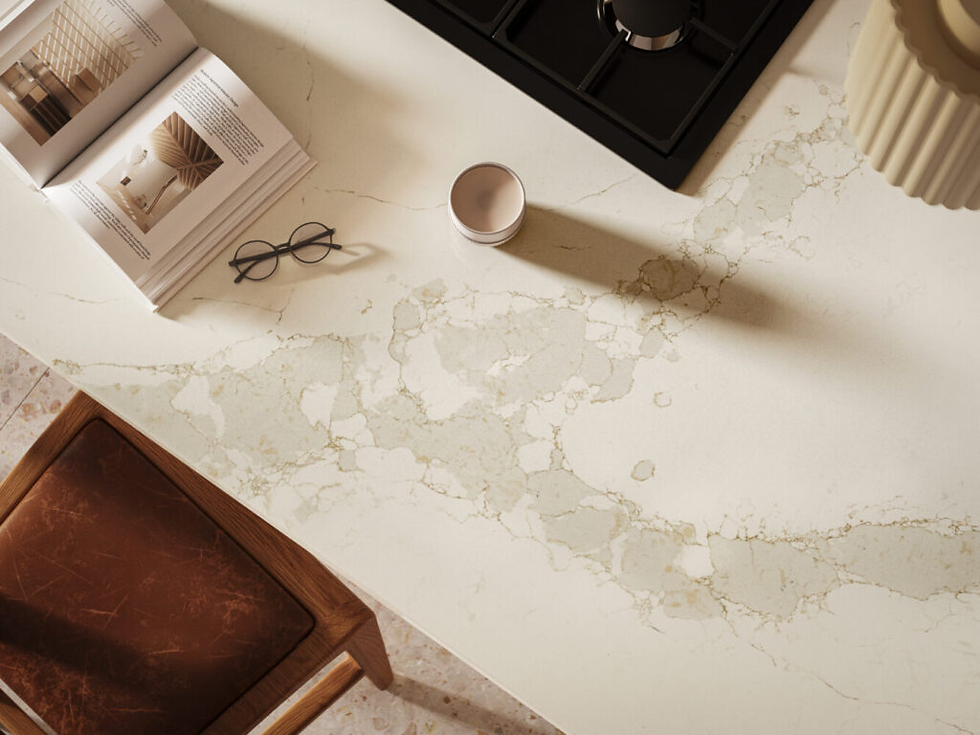

The Webbed Wonder (Spidery or Brecciated)
Characteristics: Intricate, crisscrossing lines that look like shattered glass or organic roots.
The Mood: Artistic, textured, and vintage-inspired.
Best For: Splashbacks or feature walls where you want guests to lean in and look closer.
Examples: Caesarstone Antikella or Dekton Arga


Engineered vs. Natural: The Trade-off
At BoxMakers, we predominantly work with high-quality Engineered Stone for NZ homes. Why? Because it’s non-porous and the patterns are predictable, meaning we can plan exactly where a vein will sit on your island.
The Limitation: While engineered stone is incredibly realistic, it lacks the "infinite depth" of natural marble. Natural stone has a translucency and unique defects that can never be 100% replicated. However, for most modern households, the durability of engineered stone wins every time.


